



Dr. Philippe
Lambin
Philippe Lambin, MD, PhD, is a clinician-scientist and radiation oncologist. He earned a PhD in Molecular Radiation Biology and is Professor of Precision Medicine at Maastricht University. He is an ERC Advanced Grant laureate and recipient of three ERC Proof of Concept Grants. Lambin is widely regarded as one of the founders of radiomics and has pioneered translational cancer research in tumour hypoxia, functional imaging, genetically modified bacteria for cancer treatment, and AI-based clinical decision support systems. He has co-authored more than 642 peer-reviewed publications, received over 89,000 citations, and has a Google Scholar h-index of 137. He is also co-inventor of multiple patent families and has supervised more than 81 completed PhD theses. His work has contributed to precision oncology, including clinical trials, immunotherapy, lung and head and neck cancer, federated learning, lymphocyte-sparing radiotherapy, and MEDiomics.
Title:
From Radiomics 1.0 to Radiomics 3.0: Quantitative Medical Image Analysis in the Multi-Omics Era
Abstract:
Quantitative medical image analysis provides an important foundation for downstream work in precision medicine. This keynote will provide an overview of recent developments in the field, with a focus on the progression from handcrafted radiomics to deep learning, foundation models, multi-omics integration, and synthetic medical imaging. Examples from different cancer types will be used to illustrate applications in lesion characterization, outcome prediction, treatment response assessment, and patient stratification. The lecture will also address the integration of radiological imaging with pathology, clinical data, and molecular information as an important direction for future research in precision medicine.
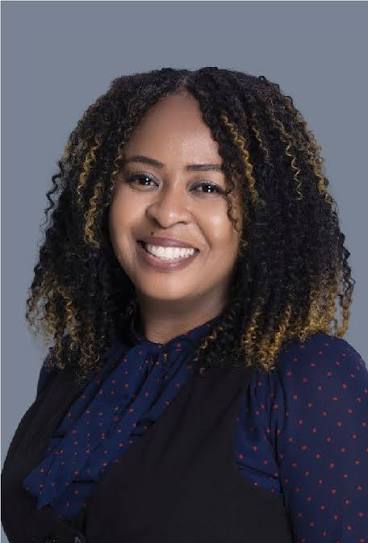
Dr. Matilda Isaac
Dr. Matilda Isaac is the Interim Dean and Senior Associate Professor at the School of Internet of Things, Xi'an Jiaotong-Liverpool University (XJTLU) . She earned her PhD in Technological Studies from Eastern Michigan University and has extensive experience in both academia and the manufacturing industry across the US, UAE, Haiti, and China. She is a Senior Fellow of the Higher Education Academy (SFHEA), a member of IEEE WIE (Women in Engineering), ASIS&T, and IET. Her research focuses on wireless sensor networks for e-health with edge-intelligence, machine learning, deep learning, computer vision, and neural networks . She currently leads an innovative project at XJTLU's Centre of Excellence for Syntegrative Education (CoESE) aimed at enhancing elderly care and remote monitoring through AI-enhanced IoT.
Title:
From Intelligent Healthcare Devices to Secure Personalized AI: Building the Next Generationof Connected Health Ecosystems for Healthy Ageing
Abstract:
The rapid growth of ageing populations presents a major challenge for modern healthcaresystems. Globally, more than one billion individuals are aged 60 years and above, with projectionsestimating this number will reach 2.1 billion by 2050. In China alone, the elderly population exceeds280 million and is expected to surpass 400 million within the next decade. This demographic shiftplaces increasing pressure on healthcare systems and highlights the need for intelligent, scalable, andpersonalized healthcare solutions for older adults.This project presents a three-stage framework integrating healthcare hardware innovation, artificialintelligence, and privacy-preserving distributed learning for elderly care applications. The firstcomponent focuses on developing healthcare devices capable of therapeutic interventionphysiological signal monitoring, and wireless power transfer for continuous operation. The seconccomponent introduces an Al-assisted framework for large-scale health data acquisition, processinganalysis, and information extraction to uncover clinically relevant patterns. The third componenaddresses privacy and system heterogeneity through a personalized Federated Learning architecturfor cloud-edge environments designed to improve data privacy, reduce communication latency, anenhance learning performance. Together, these components establish a pathway toward secureintelligent, and personalized healthcare ecosystems supporting healthier and more independenageing.
Prof. Zhihai He
Zhihai He is a Chair Professor in the School of Artificial Intelligence at Southern University of Science and Technology, an IEEE Fellow (2015). Before returning to China full-time in 2021, he spent 18 years (2003–2021) in the Department of Electrical Engineering at the University of Missouri, where he held the Robert Lee Tatum Chair Professorship. His research interests include generative artificial intelligence, large vision–language models and AI agents, and multimodal human–computer interaction.
Title:
Generative and Agentic Methods for Visual Signal Processing and Analysis
Abstract:
Generative and agentic methods offer a new framework for visual representation, coding, and intelligence. This talk presents our recent research on controllable image generation, semantic editing, and generative image coding. We discuss how diffusion inversion, conditional latent representations, and adaptive inference improve reconstruction fidelity, preserve visual content, and enable efficient compression. We further explore how agentic reasoning and feedback can connect visual understanding, generation, and communication within a unified framework for visual intelligence.
